Talent Tree: Alicia Cornelia - Senior Game Producer, Hearthstone
Talent Tree is a new blog series about the talented people behind everything we create. Each month, we’ll chat with a different Blizzard employee about their role and how they approach their work. First up is Alicia Cornelia, senior game producer on Hearthstone.
Tell us a little bit about your background. How did you get your start at Blizzard?
Growing up, my family had to work really hard for what they had. When I graduated with a math degree from the University of Rochester, I was just trying to survive. I became a data analyst for a telecom company, and in my free time, I dug into my favorite hobbies: playing and making games. World of Warcraft and Heroes of the Storm got me through some of the hardest times in my life. My partner (now husband) and I did a bunch of game jams with friends who all studied game design and development – people who were actively chasing their dreams. Even though I didn’t have the formal education or certifications my friends had, I decided to apply to Blizzard. I focused on technical program manager roles where I could leverage my analytics skills and my knack for problem-solving. When I was interviewing, I knew I just needed to put my best foot forward and figure it out. And soon, I landed a role as an associate program manager for Battle.net.
What led you to become a game producer?
During my first four years at Blizzard, I worked in tech-heavy program management roles. My leaders encouraged me to pursue a path in production that would put my skills and passions to better use–I still felt unqualified because I lacked “formal” training, but what I know now is that every experience you have on the job is training you can apply to your future. When the pandemic hit, I asked myself what I really wanted to do with my life.. I decided to just go for it and applied to producer roles across Blizzard, ultimately securing a role on Hearthstone, a game that has meant so much to me. Four years later, I can tell you working on Hearthstone has been the best career experience of my life.
What is the role of a producer and how do they function in the development process?
A producer creates schedules and strategies, planning how a development team will complete all the steps necessary to release a game by its launch date. A producer maps out all the materials, people, and milestones needed to get the game across the finish line, establishing what those milestones are, when they fall, why they fall in the order they do, and how the team will reach them. A producer can oversee an entire project, or they can manage the time of one particular team like engineering or UI/UX. Some teams work very early on in the production cycle, some near the end. It’s all a matter of balancing the resources you have to meet the project’s goals.
How do you approach a new project?
When our leaders present us with a set of challenges or new features they’d like us to pursue, the first thing I do is ask a ton of questions. That’s a skill set any producer needs to master – working with very little information and determining what info you need to do your job. I determine who are the stakeholders, what’s the scope of work, what resources do we have to work with, what’s our timetable, and what are the risks that could keep us from reaching our deadline. Asking lots of questions also gives you an understanding of how everything in game development is interconnected. From there, my team and I will put together some ideas to pitch to leadership. Before we pitch though, we always share our ideas with the team and get their thoughts first, whether they’re excited by them or if they have doubts or concerns. It’s so important that the people who work on this game are all on board with whatever we choose to do.
How do you balance the needs and expectations of different groups to get a game out the door?
It is integral to have empathy for the people around you and for your players, making sure they trust you, that you respect them, and that their thoughts and opinions matter. Your team is trusting you to make the right call when it comes to decisions that affect the timeline. They may come up with great ideas after we’ve already agreed on our direction, but it’s up to a producer to understand the costs of implementing new ideas late. If you implement something after a deadline has passed, you’re breaking the backs of QA, localization, and so many other teams; you have less time to test so you potentially miss bugs; and you risk putting something out that’s not up to your standard of quality.
What’s one of the biggest lessons you’ve learned that you think aspiring producers would benefit from?
The enemy of quality is lack of planning. Whatever your timetable, bake in additional time for play testing and polish. You’re always going to have bugs, so assume everything is going to break at some point in the process and give yourself time to identify those issues. In the end, your game needs to be as good as it possibly can be, and as good as your players deserve it to be.
Last question: who’s your favorite Blizzard character?
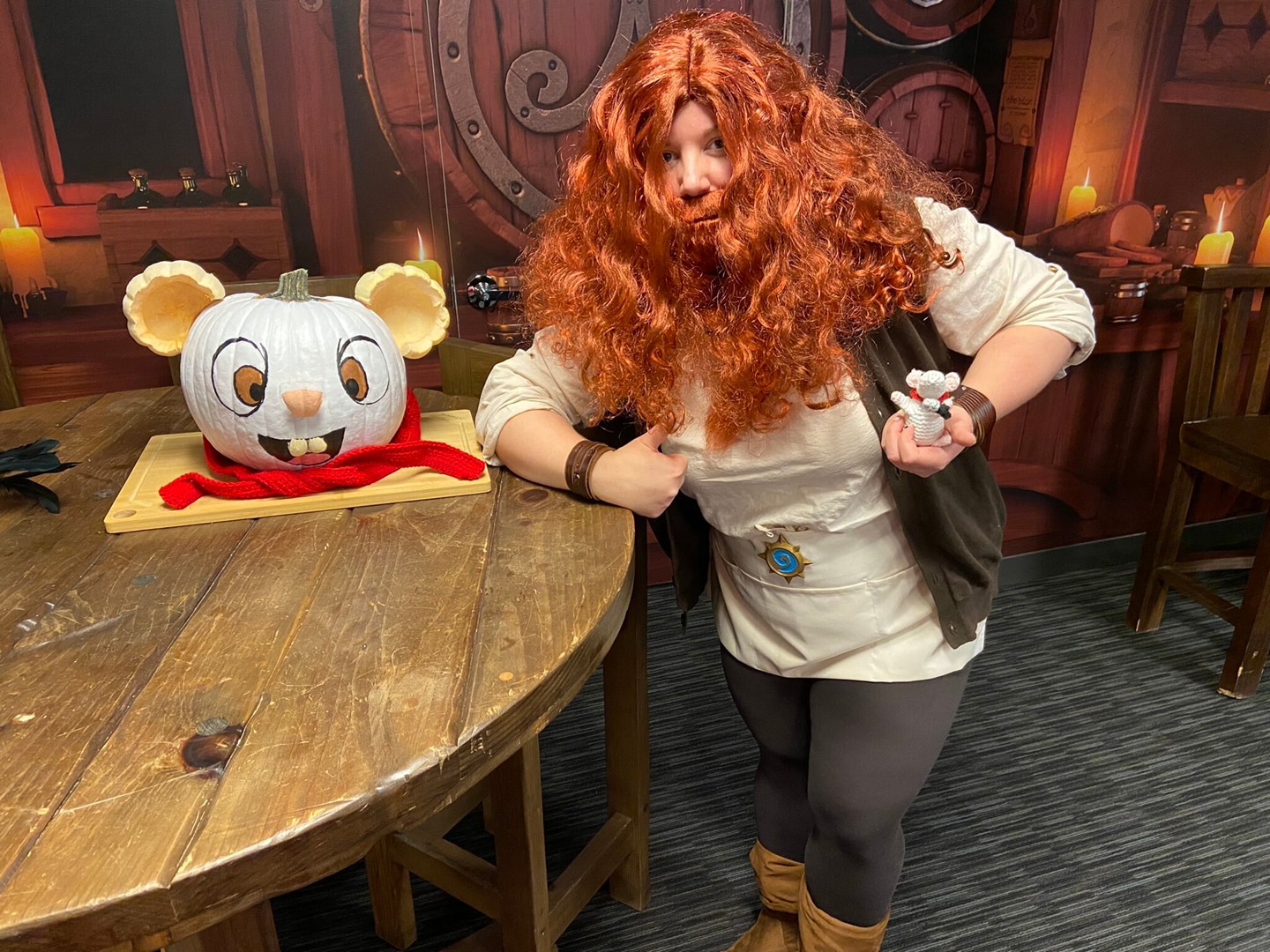
Sarge! The pet rat of our innkeeper Harth Stonebrew. To me, Sarge represents the role our Hearthstone development team plays for our players. Just as Sarge ferried young Ava to the tavern in the “Hearth and Home” cinematic, even when times are bleak and the world seems unforgiving, we’ll be here to welcome you into the warmth of the tavern.
To see more of what members of the Hearthstone team have been working on, check out The Great Dark Beyond Mini-Set: Heroes of StarCraft, available now!